Belgian Beer Yeast in Whiskey
How We Build Epoch Rye's Flavor
Whiskey is a truly complex drink that has been enjoyed, discussed, and argued over for centuries. There is no end to the small choices a distiller can make that will impact the final character of a whiskey, from the grain that goes in, to the proof in the bottle. However, one aspect that has often been overlooked is the choice of yeast, and the variety of flavor that can be achieved simply by selecting a non-traditional yeast for a whiskey fermentation. Every decision that went into crafting Epoch Rye was made to add more flavor and complexity to the whiskey, and one of the boldest choices was to use a Belgian beer yeast as our primary yeast strain. So how does something as small as yeast have such a big impact on whiskey character? Let’s find out.
What Is Yeast, and Why Does It Matter for Whiskey?
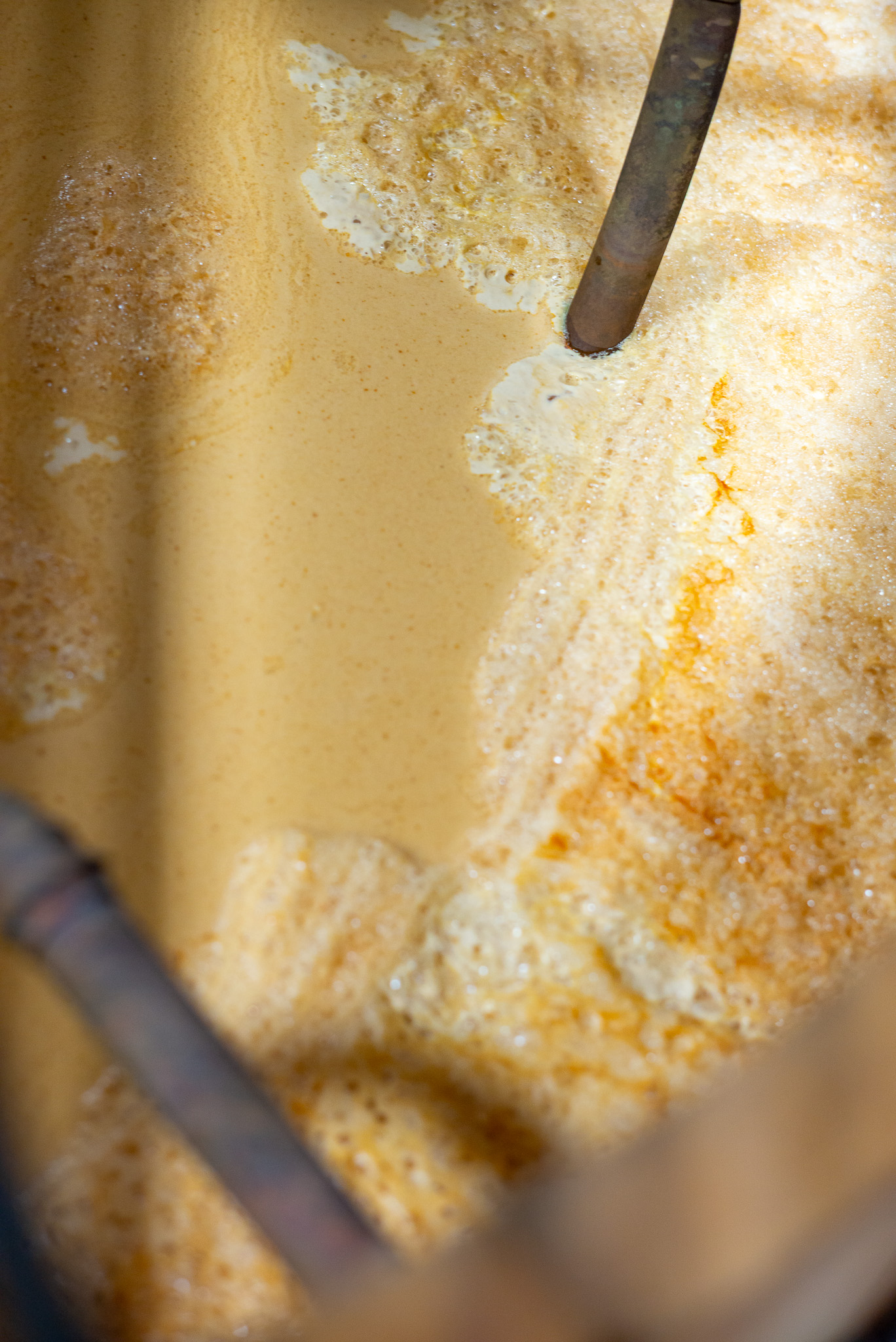
First things first: what is yeast, and why do we need it to make whiskey? Yeast is a single-celled fungus, which means it belongs to the same kingdom as mushrooms and molds. In whiskey, beer, wine, and bread making, the most common yeast used is Saccharomyces cerevisiae. To make whiskey from cereal grains, we need to extract the sugar from the grain, then ferment and distill it. Importantly for our discussion, fermentation is the metabolic process where yeast consumes sugar and releases ethanol and carbon dioxide as by-products. So when we add yeast to the sugars we’ve extracted from our grains, we ferment that liquid into beer. That beer then goes into the still and undergoes the physical separation of distillation, which gives us our new make Epoch Rye. The equation for alcohol production from glucose is C₆H₁₂O₆ → 2C₂H₅OH + 2CO₂, meaning that for every molecule of glucose we put in, alcoholic fermentation produces two molecules of ethanol (C₂H₅OH) and two molecules of carbon dioxide (CO₂). What this equation doesn’t show is the approximately 1% of molecules produced during fermentation that have an outsized impact on the flavor of whiskey.
The Flavor Chemistry of Fermentation
These fermentation-derived flavor molecules fall into a few different categories. Primarily, when we talk about whiskey flavor, we’re talking about esters, organic acids, aldehydes, and higher alcohols (larger alcohol molecules than ethanol). Esters are a combination of an alcohol and an organic acid and produce many of the fruity flavors that make whiskey enjoyable. The most prevalent ester in whiskey is ethyl acetate, which smells like pear or green apple and is derived from ethyl alcohol (ethanol) and acetic acid. Isoamyl acetate is an example of an ester derived from a higher alcohol; it comes from isoamyl alcohol and acetic acid and smells like bananas. Aldehydes like acetaldehyde bring more pungent notes, but in the correct amount still make important contributions to the overall flavor of whiskey.
Why We Chose a Belgian Beer Yeast
From the outset, we knew we wanted Epoch Rye to be a unique and flavorful rye whiskey, one built on deliberate choices rather than change just for the sake of being different. When we applied this lens to the fermentation process, we immediately focused on the yeast choices available to brewers compared to the yeast choices available to distillers. Beer styles are often defined by the choice of yeast and the flavor profile it creates. Think lager versus hefeweizen versus Belgian tripel: the grain bills differ slightly across these beers, but the flavor profiles are dramatically different. Even within these categories, there are many different strains, each producing a different flavor profile. Whiskeys, on the other hand, are typically defined by the grain used to make them: rye, malt, bourbon (corn). When it came to commercially available whiskey yeasts, our options were American whiskey yeast, malt whiskey yeast, or so-called “turbo yeasts,” which are good for quick, high-alcohol fermentations. These yeasts were cultivated not for their flavor profile, but for how efficiently they fermented the base material. We looked at the pieces of the whiskey flavor equation and realized that if we took a yeast known to create more esters, organic acids, and higher alcohols, which in turn create even more esters, we could be on to something special for our rye whiskey.
The Result: Epoch Rye's New Make
So we turned to our friends at one of our favorite local breweries, The Brewer’s Art, and asked if we could use the excess yeast from their Belgian beer fermentations (Resurrection, for the curious locals) to make our whiskey. Their beer was full of flavor and complexity, deriving in part from the esters and phenols their yeast, Wyeast 3787, was known to produce. After our initial fermentations and distillations, we knew we’d made a bold, but most importantly, delicious choice. The new make Epoch Rye wasn’t one-dimensional; it had a range of fruity notes from stone fruit to tropical (papaya, mango) that paired perfectly with the rye grain, likely the product of esters and aldehydes working together rather than any single compound. All that was left to do was let the magic of barrel aging do its work and watch Epoch Rye’s flavor profile grow and expand as the hard work the yeast did during fermentation led to the creation of more interesting and complex flavors over time. As our distilling operation grew, we moved on from using the excess yeast from The Brewer’s Art to using a dried yeast that gave us a comparable flavor profile in our fermentations. If you’ve been to our distillery, you’ve probably heard us mention SafBrew T-58, which has been the workhorse in our distillery for the past 8 years, creating barrel after barrel of a truly original Maryland rye whiskey.
As if that wasn’t enough, we actually alternate yeasts about ⅓ of the time to bring even more complexity to Epoch Rye, but that will have to wait for a future article. In the meantime, check Epoch Rye out in the Shop or do some extra credit reading on HAZMAT Whiskeys!